Just when I thought I was done with Europe, after 3 previous trips, it reminded me why this continent keeps giving you reasons to keep coming back.
I’d never given the Nordics a serious thought as a holiday. Too cold, too grim, too expensive, I’d always said. It turned out to be true on all three counts, and yet, with some nifty planning, a lot of hustling and a few bits of good luck, we covered five Nordic countries in 18 days for under $2,000.
This time I wasn’t travelling solo, or even as the usual two. There were three of us: my partner, a friend, and me. Which is also why the trip worked out on the budget it did, but more on that later.
If you have ever wanted to ride the rails through Norwegian fjords, walk the cobblestones of Gamla Stan, navigate Iceland’s Ring Road, and coming back not broke, then here’s your ultimate budget Nordic + Scandinavia itinerary.
The Plan: Chasing Lights, Collecting Countries
On a cold autumn morning, the 2nd of October, the three of us converged at Delhi’s Indira Gandhi airport, seeing each other after months, if not years, to go chase the Northern Lights.
The two men ‘tagged along’. I’d planned about 95% of the trip in the months before. What began as a casual chat with another friend about the Northern Lights turned into an Amazing Race-style, 18-day loop: Sweden, Denmark, Norway, Iceland and Finland. The logic was simple. If we were flying all the way from India to Iceland, we could string the other four onto the same thread without breaking the bank. So I booked Delhi-Stockholm-Delhi months ahead, then the buses, trains, flights and one ship within Europe over the next few weeks.
It was ambitious, breathless, and completely unsuccessful at its stated goal. It also turned out better than anything I could have planned.
Stockholm: A slow but promising start to Scandinavia
Stockholm didn’t impress at first. Grey, cold, missing the soul I’d come to associate with Europe. Arlanda, an underwhelming airport for such a rich country, didn’t help.
Then we stepped out of our hostel in Kungsholmen after sunset and got our first look at Swedish life in all its weekday glory. Smart men and women, easily the best-dressed people I’ve seen anywhere, heading home from offices, stopping for a drink at the local pub. And running. Swedes were running at 6pm on a weekday, in the cold, in work-adjacent clothes. It would become the running joke of the trip: in Stockholm, in Copenhagen, in Oslo, in Helsinki, people ran before work, after work and during work, come rain or shine. Maybe there’s something to learn there.
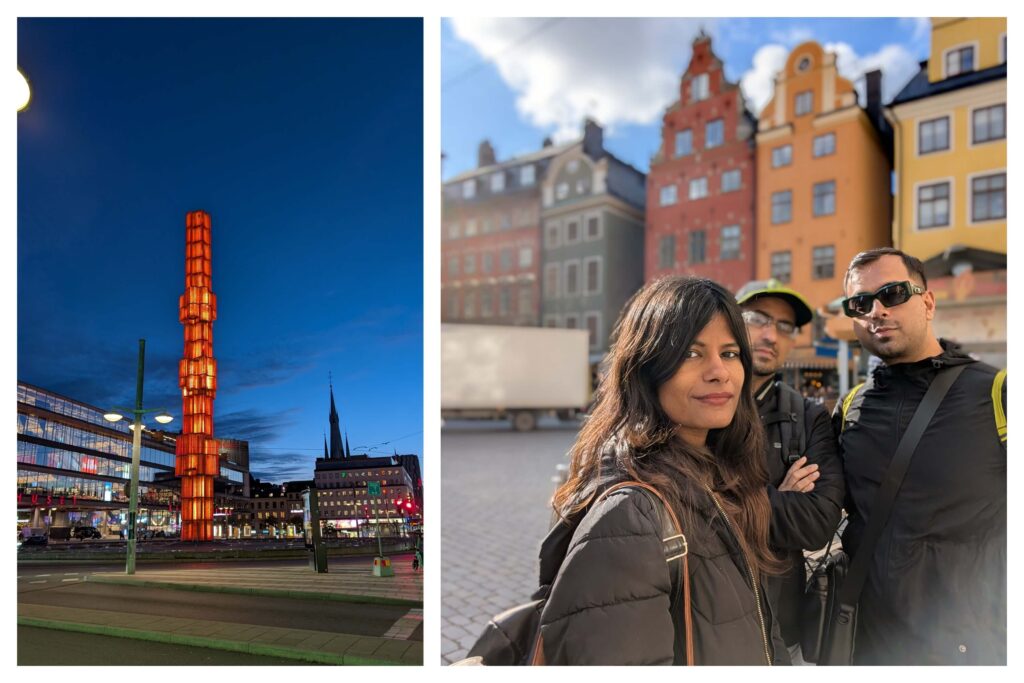
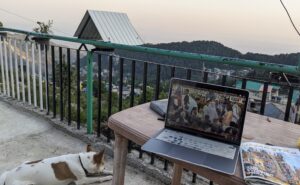
If I was missing ‘Actual Europe’ in Stockholm the first day, the second day, it took us back to quintessential Europe in the old town or ‘Gamla Stan’ area. Cobblestoned narrow streets, smell of roasted coffee cutting through crisp arctic air and the uniquely shaped, colourful medieval buildings forming the perfect European postcard. We did a few rounds of the Gamla Stan, grabbed coffees to go and watched Stockholm roll into the weekend at the shoreside on a bench. Somehow, there didn’t seem to be a lot to do or at least an activity that didn’t cost a kidney. So we were only thankful to stumble upon the “Stockholm City Museum” showcasing Stockholm’s history; from its founding to the 21st century through quaint, crafty and interactive installations. The rest of the afternoon went to aimless strolling, and to a cafe attached to a petrol station, of all places, with Wi-Fi and a lovely view of the water, where we planned our next moves. By evening we were at the central bus station, waiting for the overnight bus out.
Day 3, 4 & 5
Rolling into Denmark on a Flixbus, Ikea Copenhagen, and the $25 luxury cruise to Norway
At around midnight, we got into a familiar Flixbus ($15 when booked months prior) to take us to our next destination on the way to Iceland – Denmark. The ride was mostly unremarkable, even a bit uncomfortable, except for the stretch past Malmo and Lund and onto the Øresund link, the 16-km bridge-and-tunnel that joins Sweden to Denmark, with part of it running under the sea. For a while, it didn’t feel like a bus at all. It felt like a ferry, with dark, stormy water on every side of the window.
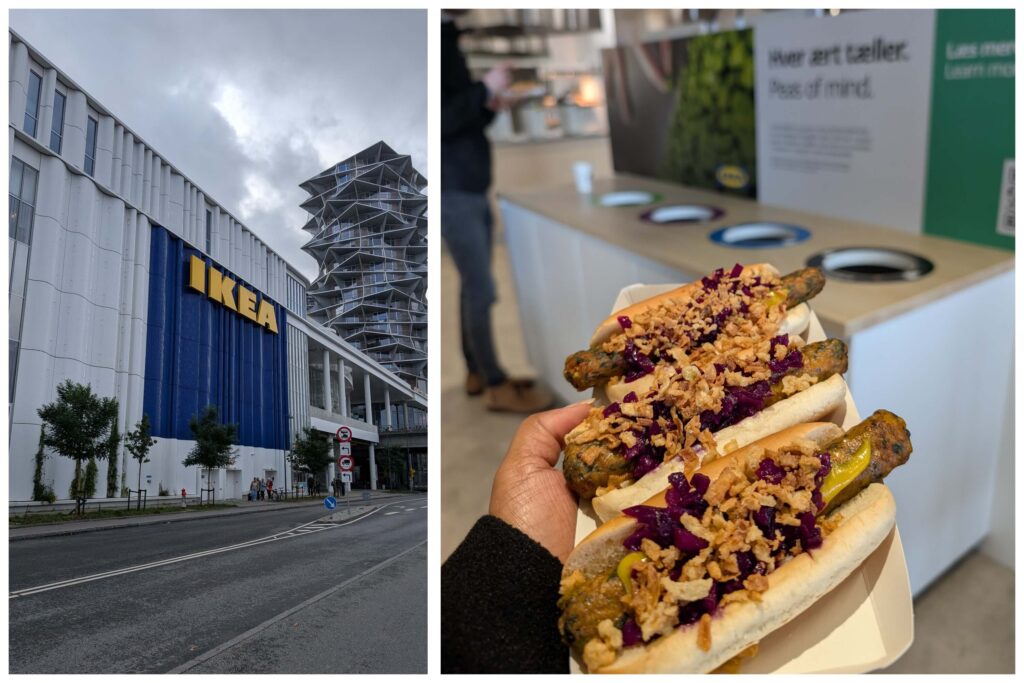
We rolled into Copenhagen around 9am, in pouring rain, with our hostel two kilometres away and no sane way to get there. So we did what any normal tourists would do. We went to Ikea!
To be honest, visiting Ikea in its homeland had been in the back of my mind all trip, but waiting out the rain at the store opposite the bus station wasn’t how I’d imagined it. I’m glad for the diversion. While the boys devoured their meatballs, I found the first real vegan food of the trip, and its best meal so far: vegan hot dogs that looked straight out of Masterchef. Fresh, full of vegetables and flavour, and $3 a pop, the cheapest thing in all of Scandinavia. I ate three. I came back the next day for more.
Copenhagen: Grumpy, Then Glorious
When the rain still hadn’t let up an hour later, we said f***it and started walking to the hostel anyway. We were wet, cold and tired. And then we walked in.
I’ve stayed in my share of hostels, and I’d thought the best of my life was in Portugal. The Copenhagen one ate it for breakfast. It was a massive space, tasteful and boho, with wooden furniture, plants, warm lighting and grey walls, spread over several common areas that managed to be a cafe, a sports club and a coworking space all at once. We couldn’t check in until 3pm (welcome to Scandinavia, where 3pm is the earliest standard check-in nearly everywhere), so we ate our packed food from home, slept on the table in front of us, and made hopeful trips to reception to ask for an early check-in on account of the weather.
Eventually we said f***it again, strapped on our rain gear (I hadn’t bought those $2 silicone shoe covers for nothing) and walked to the old quarter around Nyhavn, a canal lined with medieval buildings that now house fancy cafes and luxury brands.
I’ll be honest: the first day wasn’t going well. We saw little. We were drenched, short on sleep, and thoroughly grumpy. What should have been a lovely evening on the canal with a local Carlsberg and some smørrebrød turned into a sulk in a very underwhelming McDonald’s. When we finally checked in that evening, the room was small, a little claustrophobic and cold, a letdown after the grand lobby.
The next day was bright and sunny, and the city transformed. We joined a Guruwalk, the free tip-based walking tour that practically invented the format in Europe, and got a three-hour crash course in Danish history. Our guide threw in folklore and jokes the whole way, which was exactly the lightness we needed after the gloom of the day before. We started at Nyhavn, sliced through Stroget, passed the library and Christiansborg Palace, and ended at a church whose name I’ve since forgotten.
Then I broke away from the boys. I bought a $20 chopping board with ‘Hygge’ carved into it, walked the two kilometres back to the hostel for my backpack, detoured to Ikea for a few more vegan hot dogs, and took the subway and a 2-km walk to the Little Mermaid.
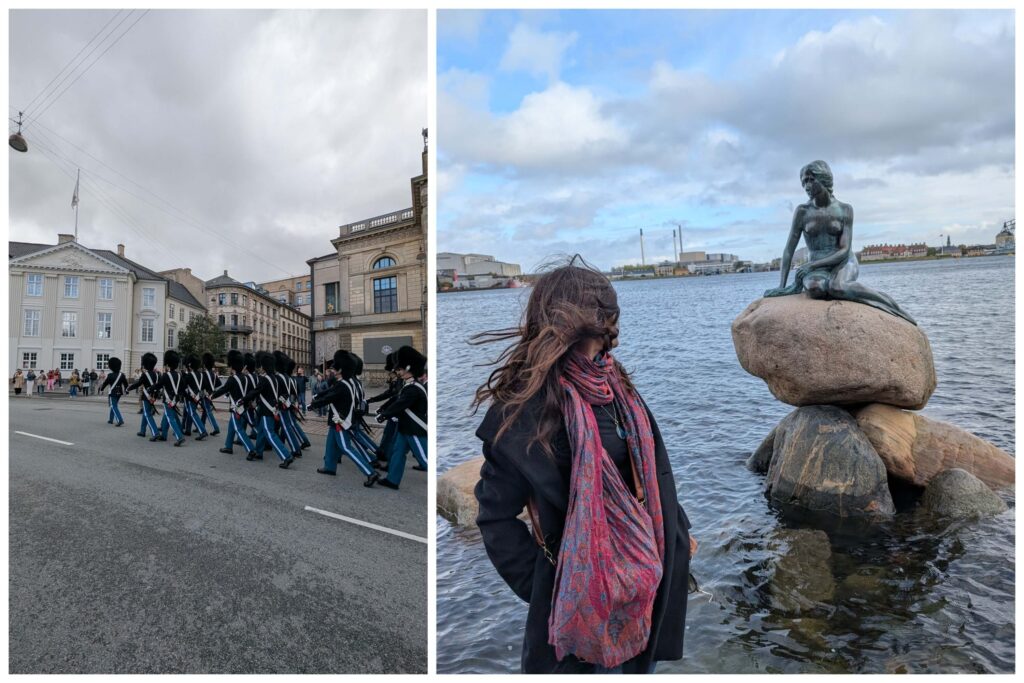
The Little Mermaid is one of Copenhagen’s most iconic landmarks, and I still don’t understand why. She’s painfully small, so small that a handful of tourists taking photos hides her completely, leaving you wondering what exactly you came to look at. But then, nobody said the Nordics were famous for their art and history the way Italy or France is.
With no data on my phone, finding my way back alone was already hard, and with an hour to go before my ferry it tipped into panic. I walked through the empty streets toward nothing in particular until, minutes before the ship sailed, I spotted the ferry terminal and rejoined the boys.
The Overnight Cruise to Oslo
The cruise turned out to be one of the best decisions of the whole trip. We crossed from one country to another without a flight, and still got the full cruise experience: multiple decks to watch the last light slip away as the ship pulled out of the Danish harbour, cafes, an entertainment lounge where we spent a happy evening losing a pop music quiz, even a duty-free shop. After a gloomy start, we were finally having a good time. And it cost about $30 each, which makes it the best travel hack of the trip.
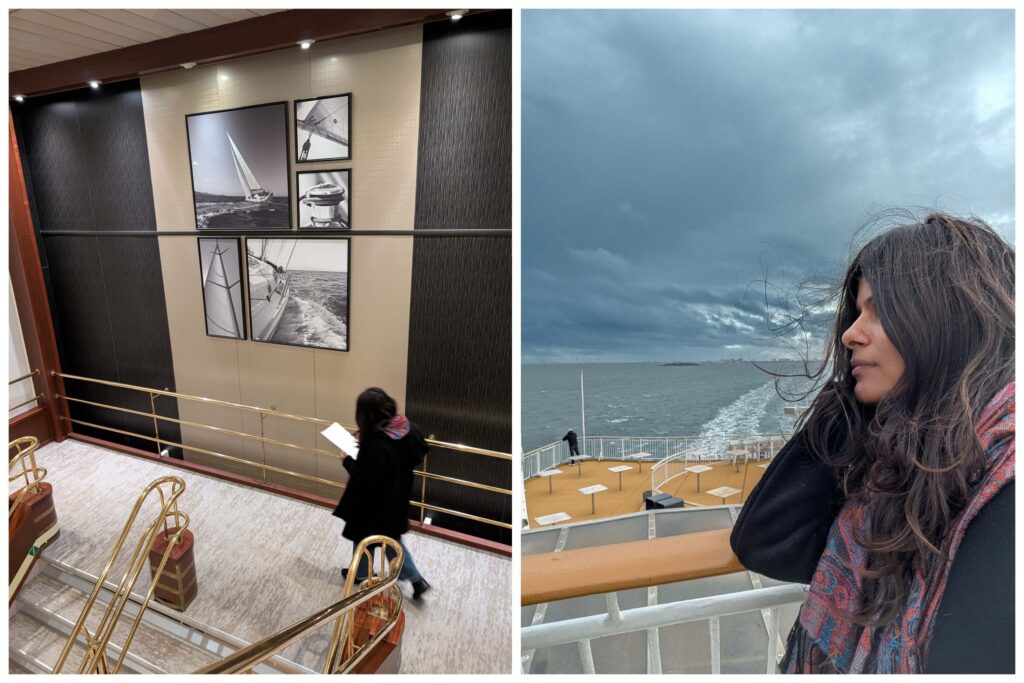
We slept well, apart from a couple of wake-ups when the ship lurched on choppy water, and woke up sailing into the Oslofjord.
Oslo, Norway: Most expensive food, 200 sculptures (?) and a city a city from the future
Unlike Copenhagen, we arrived in Oslo rested, in good spirits and in good weather: cold but sunny.
The plan had been to take the scenic train to Bergen, stay overnight, ride it back and make our flight. But I’d left the booking too late, and the one-way fare had nearly doubled to about $150. We settled for going the next day at $75 and spending the first day in Oslo instead. That’s the one planning mistake I’ll own: book the Bergen train early. It’s also the reason we had a free day to see Oslo properly.
We booked a last-minute Airbnb-style apartment in a quiet, college-heavy part of town, stocked up at REMA1000 (budget by Scandinavian standards) and set off on foot.
Norway is said to be the most developed and progressive of the Nordic countries, and nowhere was that clearer than in Oslo. The roads were wide, with separate lanes for trams, buses, cycles and cars, plus ten-foot strips on three sides given over just to trees. To my Indian sensibilities this was a shock, and an embarrassment next to the pothole-ridden chaos back home.
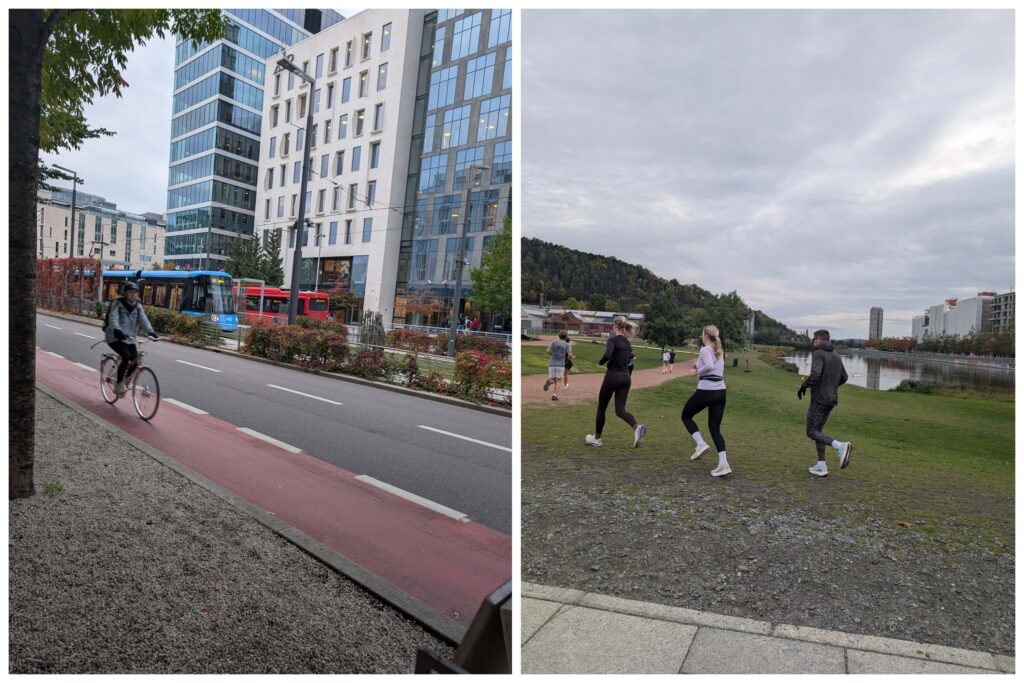
There’s also no real old quarter here. Tall, modern buildings stand where other European cities keep their medieval ones. So even with pretty much the whole day to spare, we didn’t have much to see or do, so we just strolled around the city. We spent some time at the futuristic Opera House building, all glass and modern architecture, and then desperately looking for something fun to see, we found a few mentions of the a ‘VigeLand’ with over 200 sculptures! So that was it. Except, getting there was a 3km walk, through some rather questionable areas of the city, and by the time we got to the said park, we were sure we were fooled. The sculptures were few and far between and no more impressive than the ones we’d already seen on many previous Europe trips. But I guess having 200 of them spread across a lush green hill park is what made them impressive, something we didn’t get a chance to as the whole park would’ve required hours of hiking through the woods and the heights.
Norway also lived up to its reputation as one of the most expensive places on earth. Even a sit-down cafe meal felt extravagant, so we hung around the huge central station, picked up $10 vegetarian rolls and croissants, and called it a day. The apartment, sadly, turned into a nightmare after dark. By morning, the itching told us the bed was full of bugs.
Only too glad to dash out, we left for the station again at 5am, walked to the station, packed some sandwiches, and got into the train ride to Bergen.
Bergen: When the Journey Is the Destination
What followed was 24 hours that were as beautiful as they were chaotic.
Rain had been the soundtrack of the trip, and it followed us to Norway. This time we didn’t mind. We were tucked into a plush train compartment, even on a basic ticket, for the best part of seven hours on the Oslo-Bergen line, the Bergensbanen, widely called one of the most scenic rail journeys in Europe, if not the world.
And sure enough, it was one heck of a journey through the Norwegian wood. The 450~ km and 6~ hour long Bergen line goes from Oslo to Bergen, and then back after a few hours. Crossing into the wild heart of Norway, where every curve of the track unlocks a new beauty. From the autumn-hued forests to the cutest lil chalets coming into view as the train crossed valleys, snaked through the high mountains and plunged into the Fjords.
We reached Bergen around 1pm, and the city greeted us with more rain and cold. We walked the harbour and the main street, took the funicular up the mountain for views, and found zero visibility at the top and a one-hour walk down. Bergen looked like a lovely town to spend a day or two in better weather, but this time the journey really was the destination.
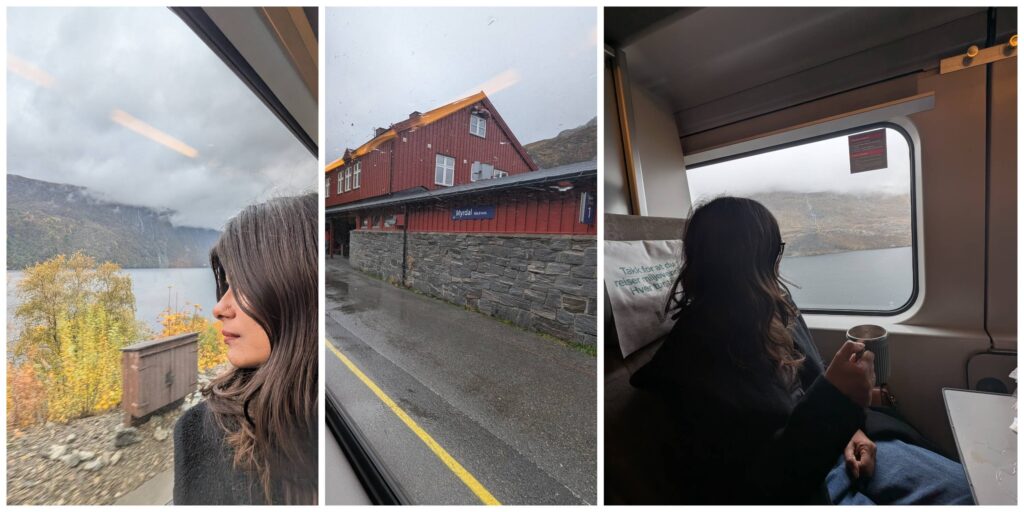
We took the same train back, with a different view for a couple of hours before the sun set. I dodged a $25 sandwich from the train’s pantry and was very glad to be slurping on a steaming cup of instant noodles I’d carried from home.
We reached Oslo around midnight, just in time for the last train to the airport. Missing it would have meant a bank-breaking midnight cab, but we were in the most organised corner of the world, where train delays are the exception, not the rule. Our flight to Reykjavik left at 9am, so we spent the night at the airport, and, whether from exhaustion or because it was the first and only free night stay of the entire trip, it was the best sleep we’d had since the trip began!
Onwards to Iceland, on the most epic road trip of our lives
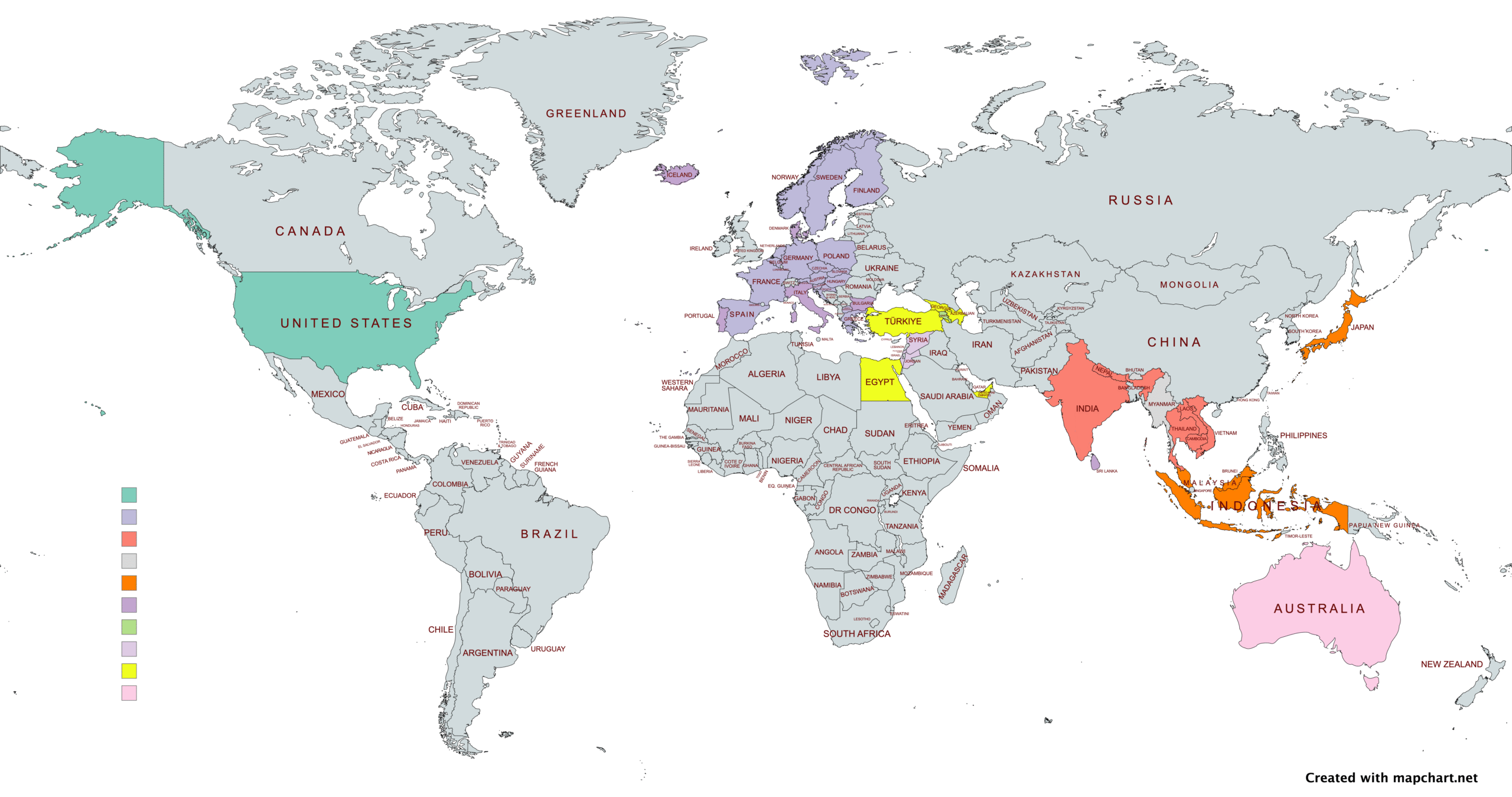
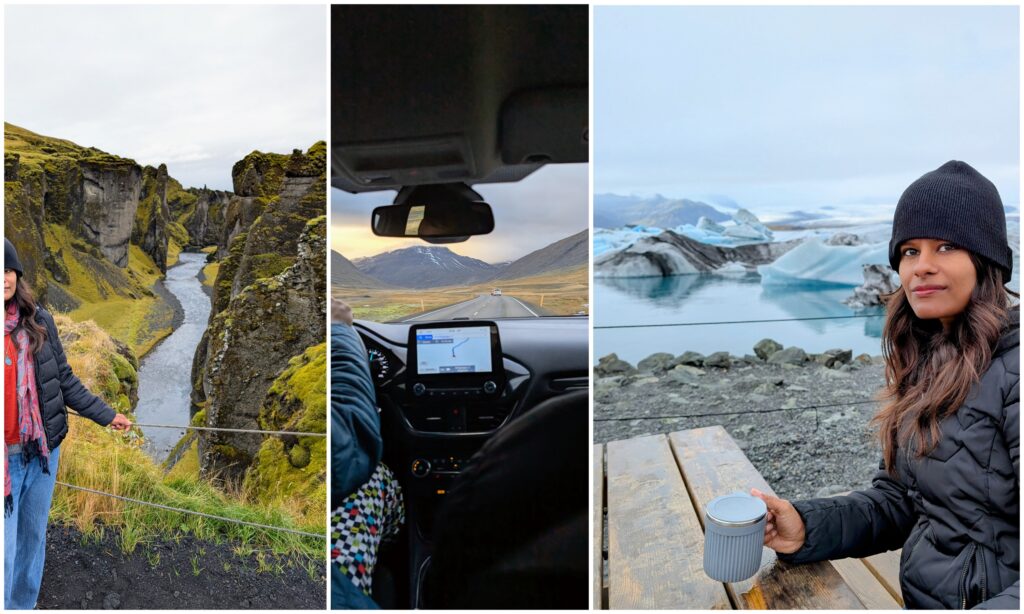
This was the point of it all. We spent a week in Iceland, three of us in one rented car, driving the Ring Road, and it was the most epic road trip of our lives. But Iceland didn’t feel like Europe at all. It felt like an unfinished earth—steam hissing out of mossy fissures, black sand clinging to our boots at Reynisfjara, and miles of empty ring road stretching beneath bruised, heavy skies. For seven days, home was a small rental car, cheap grocery-store bread and fruits, and the endless search for the next waterfall or hot spring while rain lashed sideways against the windshield. We spent a week in Iceland, three of us in one rented car, driving the Ring Road, and it was the most epic road trip of our lives.
Iceland is also where the trip’s stated goal stayed out of reach, but I’ll come back to that.
Finland, the land of nature, progressive, open living, and bit of tradition in the modern
By the time we reached Helsinki, our last country, we were high on Iceland and sad to have left it. Europe fatigue had also set in, the way it always does, and cities were beginning to blur into each other. That probably coloured my view.
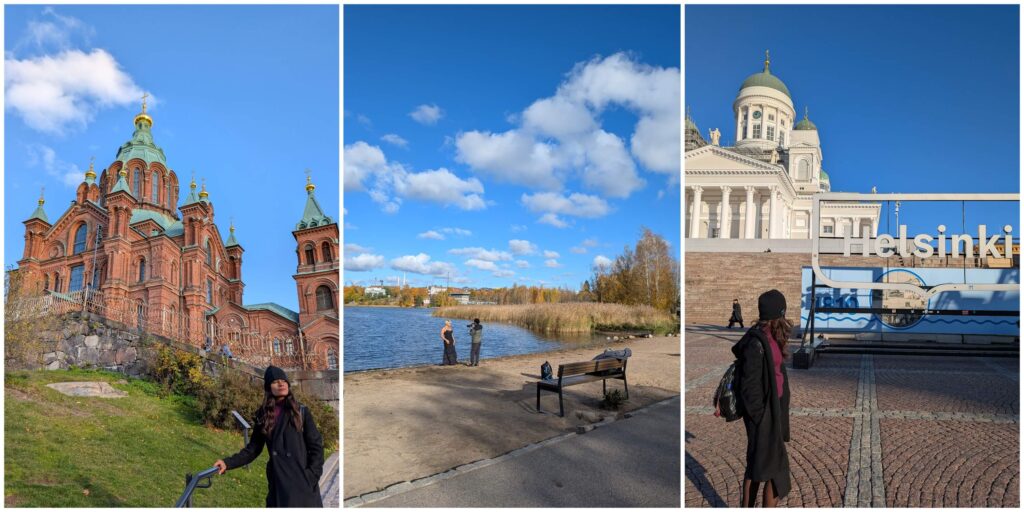
Still, Helsinki offered another side of the Nordic world. Finland, unlike the other pre-Iceland countries on our trip, isn’t a part of Scandinavia and is closer to Russia and the Baltic countries in topography and culture than Scandinavia. And this was apparent in the cityscape. A bit of old lore sat alongside the modern: onion-domed churches next to newer buildings. As on most of the trip, we checked into our hostel in the early evening and walked the town centre on foot. The next morning we joined another Guruwalk, starting at the white Helsinki Cathedral and moving through the Uspenski Cathedral and the market square, with quirky statues and gargoyles peppered around the old town. Our tour guide, regaled us with trivia about Finnish life all the way. (Did you know the sauna is a Finnish invention, and that ‘sisu’ is the Finnish word for stoic determination?)
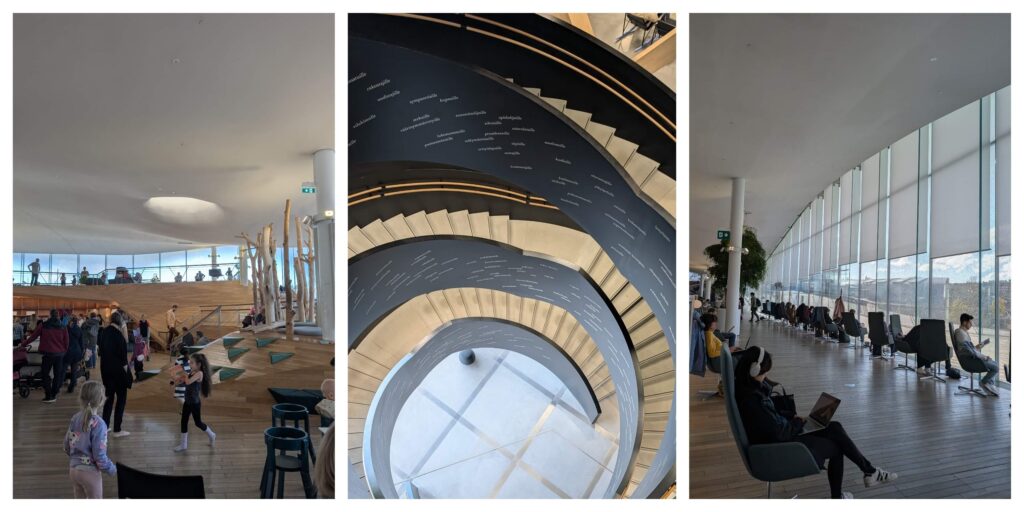
But the thing I’ll remember is not a church. It’s the Oodi Library, an avant-garde building from outside, and from inside one of the best public spaces I’ve seen: an open centre, a giant library, and a walk-in-for-all space for meetings, workshops, events and just chilling, with a cafe thrown in. It was refreshing to see a place that fostered creativity and conversation for their own sake, and it made me lament how few spaces like this we have back home. Finland after all has ranked the highest on the “Happiness Index” year after year.
Outside the Oodi library, a flea market was coming up and a rock band was warming up for a concert. We strolled back to the hostel, basking in Helsinki’s nature, tree-lined wide walkways, multiple ponds and lawns, which is very much part of its cityscape, as the music faded behind us.
Taking a $5 bus to the Helsinki airport, we boarded our final intra-Europe flight to Stockholm.
The final day back in Stockholm, the “longest art exhibit” in the world, and that Ikea trip
The next morning, we split into two teams. My partner headed to the Vasa Museum, home to a 17th-century warship that sank on its maiden voyage and was raised from the harbour in 1961. My friend and I chose the Amazing Race.
Stockholm Metro: How to cover 7 unique metro stations on a single ticket to see the ‘World’s Longest Art Exhibit’
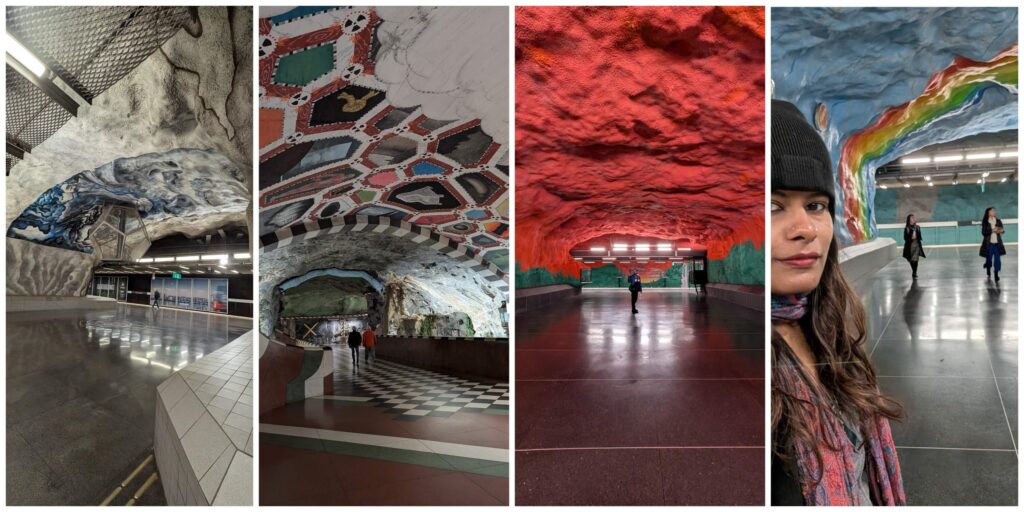
I’d found a great blog post on the art in Stockholm’s underground, which has earned the metro its nickname as the “longest art exhibition in the world”: some 110 kilometres of it, with roughly 90 of its 100 stations hosting original works. With only about two hours to spare, I put my analyst hat on and mapped the entry and exit stations that would let us see the most in the least time. A single ticket, about $5 and valid for 75 minutes, carried us through 8 metro rides and 6 unique metro stations, and every one of them blew us away.
The stations are exhibits in themselves, some more than 30 metres underground: elaborate murals, sculptures, a few sci-fi installations and museum-like relics set against raw cave walls. If you want something off-beat and cheap to do in Stockholm, look under the city, not around it. (Check out the reel on this.)
| Leg | From → To | Line | What we saw |
|---|---|---|---|
| 1 | T-Centralen → Stadion | Red | Start at T-Centralen and look up: beautiful blue floral motifs all over. Stadion is the station with cloud and rainbow art. |
| 2 | Stadion → Tekniska högskolan | Red | Tekniska högskolan is the one with sci-fi installations. |
| 3 | Tekniska högskolan → T-Centralen | Red | Back to the central hub. |
| 4 | T-Centralen → Solna centrum | Blue | The one with the Martian-red caves and green paintings. |
| 5 | Solna centrum → Fridhemsplan | Blue | A nautical theme, with a real sailing boat encased in a glass display and robots holding flowers near the exit gates. |
| 6 | Fridhemsplan → Kungsträdgården | Blue | Exit here, at the “garden station”. |
We exited at the Kungsträdgården station and found an Ikea staring at us so obviously I had to step in. We wandered through familiar Swedish-named knick-knacks, some of which sit in my own home in India, and left with a box of cookies as a souvenir. Ikea in its motherland: done.
On the walk back to the bus terminal we passed through the busy Bryggargatan street and past the giant H&M and Spotify stores, two Swedish exports that have conquered the world, and a lot of Halloween buzz. Swedish brands went global, and American traditions seem to have found their way back to the Nordics. We arrived just as our airport bus was pulling out, signalled the driver, and watched him not stop. The Scandinavian devotion to order and discipline held to the very last day. I couldn’t help picturing how an Indian bus would casually stop in the middle of a busy road, fling the doors open and let you hop on.
Thankfully, another bus came 30 minutes later and we reached Arlanda, which is, to be fair, far nicer on the departures side. My Niyo travel card got me into the airport lounge, so my farewell dinner cost nothing: a lavish meal after 18 days of hostel kitchens and supermarket sandwiches, and a fitting end to the trip.
The Lights We Never Saw
We never did see the Northern Lights. We flew to the edge of the Arctic, drove around an island that seemed to be made of waterfalls and weather, and the sky refused us anyway.
But the 18-day loop, impossible on paper, worked. Five countries, three friends, two overnight transfers, one cruise, and a little over a week’s worth of rain. I’d go back for the lights in a heartbeat. I just wouldn’t change a single thing about the trip we took instead.