
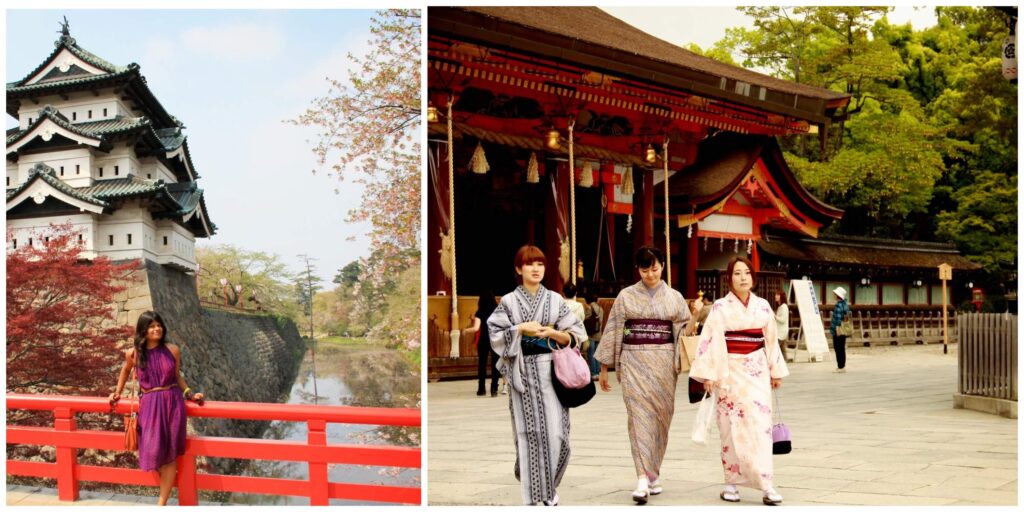
Japan had me at hello. The futuristic skyscrapers, the gothloli street fashion, the sakura raining down on castle grounds, the volcanic silence of Mt Fuji, there is nowhere else on earth quite like it. Back when I was a young corporate employee just having tasted the joy of international solo travel on a budget and Japan wasn’t the travel darling it is now, I scored these amazing introductory airfares on Airasia and booked myself a Japan trip in May of 2013! As is usually the case, I didn’t plan much, and winged most of the trip which included flying to Tokyo, then making my up to Hirosaki (for the last cherry blossoms of the season), coming down to the foothills of Mt Fuji, and dipping into ancient Japanese culture at Kyoto – all in 10 days, on a shoestring budget! Even though few things have changed – including prices, visas and some of the things you can do – Japan is timeless and this blogpost is still relevant for the overall itinerary and a typical Japan experience so read along and follow the itinerary for a wholesome Japan trip even in 2026 or beyond.
First things first. The visa.
Japanese e-visa for Indian travelers: Cheap and easy
While I received a beautiful, cellophaned pink visa sticker – with cherry blossoms – on my passport, – one that I still cherish to the day – travelers now have to contend with a rather clinical evisa. The good news is that getting a Japan visa from India is considerably easier than it used to be. Since April 2024, Japan has introduced an e-visa system for Indian citizens which gives you a stay upto 90 days for just Rs. 450 (+ VFS charges). One can apply online or at the nearest VFS centre.
Getting Around Within Japan: Bus vs JR Pass
Everyone will tell you to buy a JR Pass. I’m here to tell you there’s a cheaper way, at least for the kind of itinerary I did.
The JR Pass (7-day) costs around ₹40,000+ and covers the bullet trains (Shinkansen) and most JR lines. It makes sense if you’re doing the golden route: Tokyo → Kyoto → Osaka → Hiroshima. But if you’re happy to travel overnight and sleep on the bus instead of a hotel bed, Willer Express is a game-changer.
I bought a 4-trip Willer pass for 15,000 yen (around ₹8,000 at the time) and did four overnight bus journeys: Tokyo–Aomori (for Hirosaki), back to Tokyo, Tokyo–Kyoto, and Kyoto–Tokyo. The seats recline, there’s a privacy hood over your head, and every overnight ride is also a free night’s accommodation. You do the math. Plus, you can always buy individual train tickets if you want to experience the bullet train.
With the visa, flights and getting around in Japan in 2026 part out of the way, let’s dive into my
10-day Japan itinerary:
Day 1- Landing in Tokyo and meeting my Indian Couchsurfing host
I flew from Bangalore with a 6-hour layover in KL — long enough to step out and get that Petronas Towers moment — and landed in Tokyo around 8pm. I took the Keikyu Airport Express from Haneda to meet my Couchsurfing host in Mishima.
His apartment was my introduction to Tokyo living: a masterclass in spatial economy. The back of the bathroom door doubled as a clothes drying rack. The entrance foyer was also the kitchen. Tokyo is the most densely populated city in the world and real estate reflects that — people here have turned small-space living into an art form.
Getting from the airport: From Narita, take the Narita Express (N’EX) or Limousine Bus to central Tokyo. From Haneda (closer to the city), the Keikyu Line or Tokyo Monorail are fast and cheap. Your Suica card works on both.
Where to stay in Tokyo (2025): For budget travellers, look at capsule hotels in Shinjuku, Asakusa, or Shibuya. Hostels with dorms start from around ₹1,500/night. Asakusa is a great base — central, atmospheric, and slightly cheaper than Shibuya.
Day 2- Shibuya Crossing, partying in Roppongi and crashing overnight at a Mcdonald’s
My first proper morning, I walked out and immediately noticed what would become a theme: not a single piece of trash on the streets. Vending machines dispensing everything from hot canned coffee to cup noodles on every corner. And at the metro escalator — the Japanese queuing up perfectly on one side, leaving the other free for those walking. Imagine this in India.
I headed to Harajuku station — I can still hear the train announcement — and walked to Shibuya square. I grabbed a seat at a Starbucks twenty floors up and watched the Shibuya crossing for a solid hour. Called the world’s busiest crossing, it operates with clockwork precision — hundreds of people crossing from every direction simultaneously, not one step out of line. Hypnotic doesn’t cover it.
But I had things to do so I walked around aimlessly and soon took a metro to the upmarket Rappongi hills area hoping to visit the Google Japan office (Back then I worked at the company).From there I wandered into the Roppongi hills area, peeking into the Izakayas — tiny bars tucked into alleys, salarymen unwinding after brutal workdays, the whole theatre of Japanese work culture playing out on the street.
Tokyo nightlife: what I wish I’d known
I ended up at a club in Roppongi, dancing with expats and travellers until 1am. Then came the problem: public transport in Tokyo stops around midnight. Your options are a ¥20,000+ taxi, a pod at a capsule hotel, or doing what Tokyo residents do — finding a 24-hour restaurant and waiting it out.
I chose a McDonald’s. I wasn’t the only one. Japan is an extraordinarily safe country; restaurants and convenience stores stay open overnight with no security, and it’s entirely normal to see office workers in suits napping in booths. It was an experience I’d recommend having at least once, purely for the surreal Tokyoness of it.
Plan ahead: The last trains from major stations run around 12–1am. Keep this in mind when planning nights out, or budget for a capsule hotel nearby.

Day -3 – Watched Black Sabbath and Tool live at the Tokyo Ozzfest
One of the things about Tokyo is that things happen. My Day 3 was the Tokyo OzzFest 2013 — Black Sabbath and Tool performing live in the outskirts of the city. I’d bought tickets in advance after coordinating with my host. We took a nearly 2-hour long metro out of the city to the venue, headbanging alongside Japanese metalheads and, bizarrely, ran into an acquaintance from India who’d flown to Tokyo specifically for this festival. What are the odds.
The point isn’t the OzzFest — that’s a once-in-a-decade event. The point is that Tokyo rewards leaving your itinerary loose. Check what’s on when you visit: the city has something going on every single week, from sumo tournaments to music festivals to neighbourhood matsuri (street festivals). Give yourself one unplanned day.

Day 4 – Hachiko, the most loyal dog, Akihabara the robot district, and a 4-storey sex store
This was the part of my Japan itinerary I was most looking forward to. I met a Facebook friend from India in Shibuya, at the memorial statue of Hachiko, the legendary Japanese dog who stayed loyal to his deceased owner for years after.
On the metro to Akihabara, the Manga and Anime capital of Japan and perhaps the world, she gave me a brief primer on Miyakazi and a few notable Japanese anime characters. And sure enough, Akihabara glittered with gaming studios, shops stacked with anime and manga comics, games, merch, toys, gifts, and 30-40 feet high manga robots doing promotional rounds in open trucks! We also ended up going to a 4-storey sex toy with the most bizarre contraptions we’d ever seen! (I’d leave it to your imagination if we bought anything.)

Post some shopping in Akihabara, we met the guy who’d sent me an invitation letter for my tourist visa who showed us around the Tokyo park with a view of of Tokyo tower, Eiffel’s tower orange, Japanese cousin!

He took us to a tiny alley full of “ramen bars” in Shinjuku, and while I couldn’t have anything being vegetarian (back then Tokyo was hell for vegetarians.), when I couldn’t take it anymore, I helped myself to some rice and gravy from my friends’ ramen bowls. (yes the gravy was incredibly spicy and a flavour I’d never tasted before.)
I had an overnight bus to Aomori to catch so I legged it to the Shinjuku bus terminal, but thanks to no internet and a major language barrier, I couldn’t get there in time and missed my bus by a mere 5 minutes!
And that was my first taste – if bitter – of the famous Japanese punctuality. Everything works on a schedule and if a bus is supposed to depart at 10:40pm, it will depart at 10:40pm on the dot.
No amount of pleading or explanations helped and I had no option but to book the next bus on the spot shelling out an extra INR 5000 for the trip! Well here was my famous “one disaster per trip” I wasn’t waiting for.
At around 11pm, this new bus rolled in and I got in, surprised to see, my seat which reclined and along with it, an umbrella-like helmet for the head. So wait, Japan doesn’t do full-sleeper buses like in India but has a little umbrella on the seats to give the head some privacy?! Okay! Another in the series of little quirks of Japan.
Day 5 – Cherry Blossoms and castles in Hirosaki
I was going to the extreme north of Honshu — Hirosaki in Aomori prefecture — for one reason: sakura. By May, cherry blossoms had finished everywhere else in Japan but Hirosaki had another week left. Even knowing it was going to be expensive and far, I couldn’t come all the way to Japan and not see its most iconic symbol.
The Hirosaki Castle complex is over 500 years old, and during sakura season it’s otherworldly. Rows of cherry trees line every path — pink, white, pale blush — and the fallen petals carpet the ground beneath them. You walk through sakura overhead and sakura underfoot simultaneously. At some point around noon I sat on a bench, ate a lunch of bread and fruit under a sakura tree, wrote in my journal with a few fallen petals pressed between the pages, and just existed in the moment. I didn’t have Instagram. I didn’t have internet on my phone. I was completely there.

Once at the 500-year old Hirosaki Castle complex, I was canopied by rows and rows of sakura wherever you walked. Pink, white and everything in between. And the ones that had shed, were laid out on the ground like a carpet so it was! – sakura on top, under your feet, and everywhere else you looked.
Sakura fatigue is real, by the way. After a few hours of uninterrupted pink beauty, you’ll want a coffee and a walk without flowers. I left Hirosaki Castle by 5pm, found a small restaurant for a light vegetarian dinner (rice and pickled vegetables — survival mode), and caught my 9pm overnight bus back to Tokyo.
For 2025 visitors: Hirosaki Cherry Blossom Festival typically runs late April to early May. Book accommodation and buses months in advance — it’s one of the most beloved festivals in Japan. The castle grounds charge a small entry fee during festival season.
Day 6- Annual Shibazakura festival at the foothills of Mount Fuji
Back in Tokyo by morning, I immediately boarded a 3-hour train to Fujikawaguchiko, a resort town at the foothills of Mt Fuji. I left my luggage in a coin locker at the bus station (these are everywhere in Japan — a lifesaver) and headed to the annual Shibazakura festival.
Shibazakura — literally “lawn sakura” — is a ground-level flower that blooms in shades of pink and purple across the fields surrounding Fujikawaguchiko. The festival view is an image that short-circuits your brain: the towering, snow-capped Mt Fuji rising behind a lake, its volcanic ash skirt trailing down, and in front of it — a carpet of millions of tiny flowers in every shade of pink and purple imaginable.
I found it even more beautiful than the sakura at Hirosaki. And unlike the castle festival, this felt like a local experience — mostly Japanese families out for a Sunday picnic. Few international tourists. Just the mountain and the flowers.

Day 6- An onsen or hot spring bath in a Ryokon, Mt Fuji
After spending a couple of hours taking in the view, I hopped on a local shuttle bus to go to where I’d experience another of Japan’s must have experiences: bath in an Onsen.
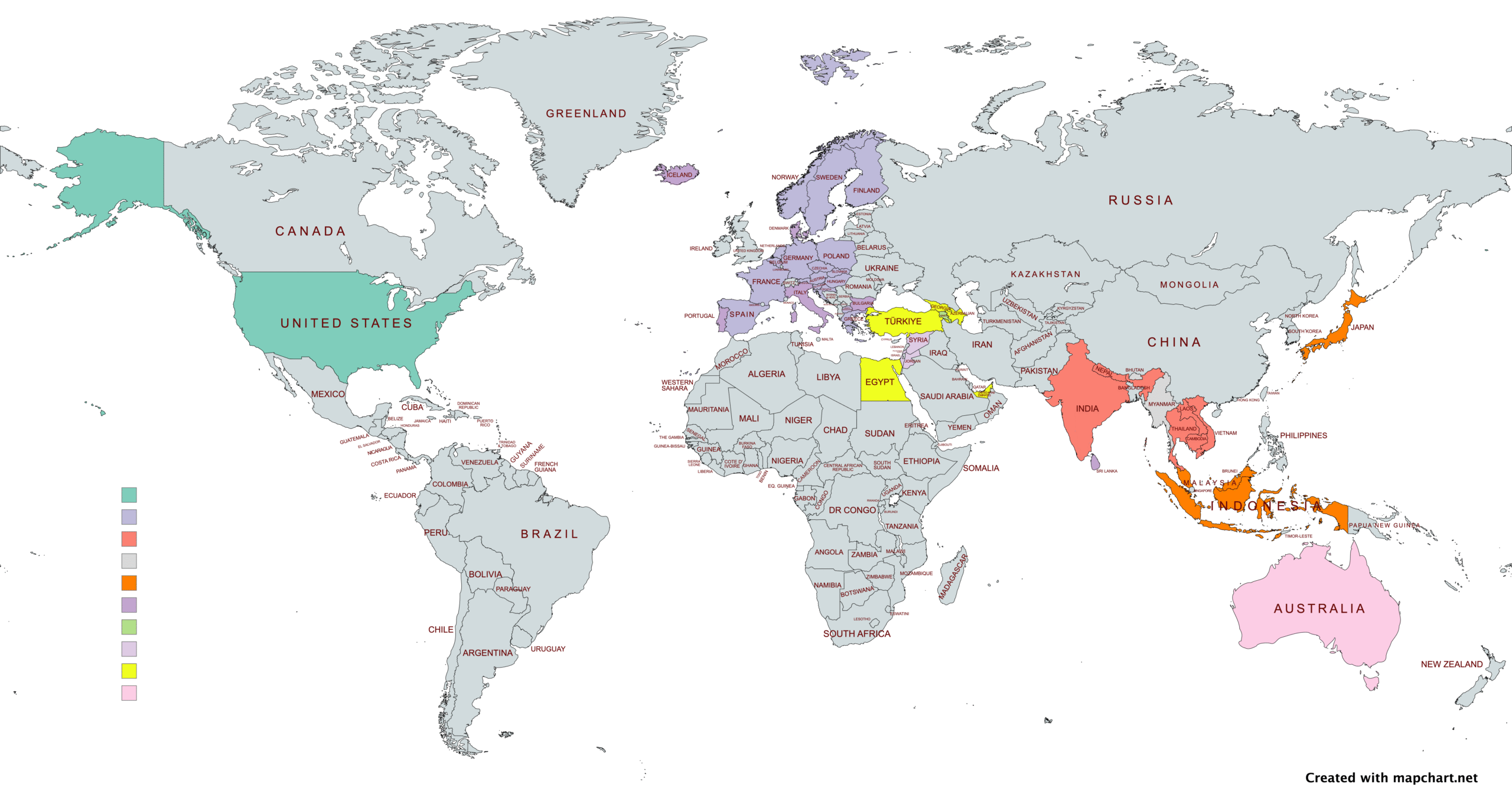
For context, lot of the world cultures have their own elaborate bathing cultures centred around natural hot springs — years after this Japan trip, I’d do the hot spring pools in Kheerganga in Parvati Valley, the Hamams in Turkey , the hot stone bath in Bhutan, and the volcanic pools in Iceland, but I find it wild that I did the Japanese onsen first! Unfortunately cameras weren’t allowed inside and back then I didn’t have a good enough phone camera so you’ll just have to use your imagination to picture the Onsen.
After a very relaxing yet a little awkward 2 hours in the scaling hot waters of the Onsen, I set out for my next destination – Kyoto. So I got on another two-hour bus ride to Tokyo and took an overnight Willer bus to Kyoto.
Day 7 -Temple Tour in Kyoto
I was in Kyoto by 8am, and I checked into the home of another Courchsurfing host – a Phd scholar at the Kyoto university which couldn’t be a better happenstance as he’d turn out to be a precious source of information on Kyoto’s history, and regale me with stories on it later. But for now, I set out to explore the city on my own. Kyoto, once the capital of Japan, is an ancient and traditional town full of temples, Buddhist and Shinto shrines and home to various other traditions, making it a must-visit for a true immersion into ancient Japanese culture.

Kyoto runs on public buses – buy a day pass at the station and you can get everywhere. My first stop was Kinkaku-ji, the Golden Pavilion: a Zen temple sheathed in gold leaf, reflected in a perfectly still pond. It’s as stunning as every photograph suggests, and exactly as crowded.
From there I hiked up to Ginkaku-ji (the Silver Pavilion) — less flashy than Kinkaku-ji but more beautiful for it, with a famous canal lined with cherry trees (just missed them by two weeks) and a sea of carefully raked silver sand. Then the 5-tier pagoda of Toji, and the grand Daitokuji temple complex with its orange pillars and ornate carved woodwork.
I allowed myself to get lost between temples — fell into watching school kids being herded into buses, a sumo session in a small dojo, kittens flitting around a temple nursery. My host joined me in the evening and walked me through the Izakaya district — lanterns, tea rooms, restaurants packed into narrow lanes.
Day 8 – Fushi minari Shrine, Matcha, and first look at Geishas
The next day I took a metro and right outside its exit, found myself at the stunning Fushiminari Shrine. Fushimi Inari Shrine is, in my opinion, the single most visually extraordinary thing in Japan. Right outside a metro exit, it opens into thousands upon thousands of brilliant orange torii gates walking up a forested mountain in a tunnel that goes on for miles. Each gate is donated by a business or individual; there are over 10,000 of them. Walking through feels like passing through a different dimension.

You can walk the full 4km to the summit (about 2–3 hours each way) or go as far as you like and return. I walked to roughly the halfway point, where the crowds thin and the silence becomes extraordinary, then came back down.
Later I hung around the tourist district with a Brazilian backpacker I’d met, discovering Japan’s matcha obsession in full force. Matcha ice cream. Matcha KitKats (seriously, these alone are worth the trip). Matcha smoothies. Matcha soft-serve with an existentially perfect swirl. Matcha is the unofficial flavour of Kyoto.
The day ended in the Geisha district – Gion – where I walked streets straight out of a different century. Maikos (young women training to become geishas) moving in their kimonos and wooden geta sandals, the sound of their footsteps in the narrow lanes, lanterns glowing in the dusk. My host mentioned there was a theatre hosting Geisha performances that evening, but I’d run out of time. After a fulfilling walk around Kyoto, past its charming canals and trees that were cherry blossoms in bloom until a week ago, and drinking – not sake– but from the culture of this mighty impressive town, I headed out again for an overnight journey, back to Tokyo to wrap things up.

Day 9: Sanja Matsuri-Mikoshi festival, day partying in Yoyogi park, Shopping at 100 Yen Stores in Takeshita Street
Today was going to be my last proper day in Tokyo and Japan so I didn’t want to waste any time lingering, even though I wanted to rest after the intense last one week.
I arrived at Shinjuku bus terminal at 8am and went straight to Sensoji, Tokyo’s oldest Buddhist temple in Asakusa. What I hadn’t planned for was luck: the Sanja Matsuri festival was underway. Men in traditional, which was rather risque, dress carrying enormous ornate mikoshi (portable shrines) through the streets, drums and flutes, crowds cheering — one of Tokyo’s three great festivals, happening by pure chance on my last day.
This is one of the things about Japan that no itinerary can fully plan for: the city is constantly alive with local festivals, seasonal events, neighbourhood celebrations. The more loosely you hold your plan, the more you find.

From Sensoji I walked to Yoyogi Park – Tokyo’s Central Park – where I discovered a less traditional side of the city. Picnickers drinking openly on the grass, impromptu band performances, teenagers in elaborate cosplay, families on bicycles. The contrast with the orderly salarymen in the Izakayas couldn’t be more complete.

Shopping in Japan, Kawaii, and Daiso
Finally, I wanted to tuck in some shopping before flying out so again, I stopped at the famous Takeshita street, the high-street of Tokyo where all the bizarre and avant-garde fashion lives, walks and struts. Though Tokyo is prohibitively expensive and my cheap Indian ass wasn’t going to splurge much so I just contended with a Daiso (a 100-yen store) and got myself some “Kawaii” items, manga miniatures, a cotton Kimono suit for my niece, a geisha doll, some chopsticks, matcha treats, and of course a fridge magnet.
What’s Kawaii and why’s it all over Japan?
I can’t possibly do this travelogue on Japan without a note on Kawaii. The Japanese phrase Kawaii roughly means cute and its physical manifestations means small child-like baubles and things that add a bit of charm and childlike-innocence to otherwise mundane things like phone covers, school bags, suitcases and even architecture. Don’t be surprised to see 100-floor high business buildings with an inflated Hello Kitty at the entrance for a touch of Infrastructural Kawaii!) People around the world may not be aware of the origins but today the Kawaii culture has inspired dressing, accessories, and phone cases around the world!

And just like that, I took the Yamanote line for the last time to get to my host’s place, cooked a nice Indian meal for him and me and took off for the Tokyo Haneda Airport for the last time.
Day 10 – Flying out back home and another stop in KL
I used my last morning to wander Shinjuku, buy omiyage (souvenirs — Japanese gift-giving culture means everyone back home expects something), and eat a last proper konbini breakfast. Then airport, then the long flight back.
India-Specific Japan Travel Tips for 2026
Vegetarian Food in Japan: The Honest Guide
When I visited in 2013, Tokyo was genuinely difficult for vegetarians. I survived on konbini onigiri, plain rice, and whatever non-fish, non-pork fragments I could identify on menus. Things have changed significantly.
What works now:
- T’s TanTan inside Tokyo Station: fully vegan ramen and gyoza — one of the best meals I had on a return trip
- CoCo Ichibanya (curry chain): has a vegetarian menu at some locations
- Konbinis (7-Eleven, Lawson, FamilyMart): umeboshi and kombu onigiri are vegetarian; increasing range of labelled veg options
- Shojin ryori: Buddhist temple cuisine, entirely plant-based; a beautiful cultural experience available at several Kyoto temples
- Indian restaurants: There’s a solid Indian restaurant in almost every major tourist area now — Govinda’s in Asakusa is run by ISKCON and is pure vegetarian
- HappyCow app: crowdsourced veg/vegan restaurant finder, essential
Watch out for: Dashi. It’s an invisible fish stock used as a base in miso soup, many noodle broths, vegetable tempura dipping sauces, even some pickles. Something can look vegetarian and contain dashi. Learn to say: “Watashi wa bejitarian desu. Niku, sakana, dashi wa tabemasen.” (I am vegetarian. I don’t eat meat, fish, or fish stock.)
My 2013 tip of carrying Top Ramen cup noodles from India still stands — hot water is always available in Japan, and it’s a good backup for hungry moments in temples and parks.
Money & Payments in Japan
Japan is still a cash-heavy society, though cities are rapidly modernising. ATMs at 7-Eleven and Japan Post accept most Indian debit/credit cards. Withdraw cash at the airport and keep some on you at all times — many smaller restaurants, shrines, and rural spots are cash only.
The Suica or Pasmo IC card (add to Apple/Google Wallet) handles all local transport and most convenience stores. It’s the easiest way to get around without fumbling with coins.
Best Time to Visit Japan
March–May for cherry blossoms and spring festivals — the most popular and most expensive time. Book accommodation and transport months ahead. October–November for autumn foliage, cooler temperatures, and arguably better hiking. June/September are rainy season but cheap and uncrowded. December–February is cold but excellent for Mt Fuji views and dramatic winter scenery.
Are 10 Days Enough in Japan?
It’s enough for a first trip that covers Tokyo thoroughly, one regional destination (Hirosaki in my case, or Nikko, Nara, or Hakone for others), and Kyoto. You will leave wanting more. That’s the correct outcome. Japan is one of those countries that earns a second, third, fourth trip.
Frequently Asked Questions about traveling to Japan
Do Indians need a visa for Japan?
Yes, Indian passport holders need a tourist visa. Since April 2024, Japan offers an e-visa facility. Total cost is around ₹1,250 (visa fee + VFS service charge). Processing takes a minimum of 5 working days.
Is Japan expensive for Indian travellers?
It can be, but on a budget it’s manageable. Stay in capsule hotels or hostels (from ₹1,100/night), eat at konbinis and local eateries (₹300–800 a meal), use overnight buses instead of bullet trains, and you can do 10 days for ₹60,000–₹80,000 excluding flights.
Should I buy a JR Pass?
Only if your itinerary involves frequent bullet train travel across multiple cities (Tokyo–Kyoto–Osaka–Hiroshima is the classic JR Pass-friendly route). For my routing, overnight Willer buses were significantly cheaper. Use the JR Pass Calculator to check.
What Japanese phrases should I know?
- Sumimasen — Excuse me / Sorry (the most useful word in Japan)
- Arigatou gozaimasu — Thank you very much
- Ikura desu ka? — How much is this?
- Watashi wa bejitarian desu — I am vegetarian
- Eigo ga hanasemasu ka? — Do you speak English?
Is Japan safe for solo women travellers?
Extremely. Japan consistently ranks among the safest countries in the world. I travelled solo as a woman throughout and felt safe at every point — late nights, rural areas, overnight buses, all of it.
What app do I need for Japan?
Google Maps works excellently for transit routing. Google Translate’s camera mode is a game-changer for menus. HappyCow for vegetarian food. Japan Official Travel App (JNTO) for general guidance. Download offline maps before you go.
Final Costs (2013 Reference + 2025 Estimates)
| Item | My 2013 Cost | 2025 Estimate |
|---|---|---|
| Return flights (Bangalore–Tokyo) | ~₹25,000 | ₹25,000–₹45,000 |
| Visa | ₹750 | ₹1,250 |
| Intercity buses (4 trips, Willer) | ~₹8,000 | ₹10,000–₹15,000 |
| Accommodation (~6 nights) | ~₹10,000 | ₹12,000–₹20,000 |
| Food (10 days) | ~₹7,000 | ₹10,000–₹15,000 |
| Activities & transport | ~₹5,000 | ₹7,000–₹10,000 |
| Total | ~₹55,000 | ₹65,000–₹1,06,000 |
Japan in 2025 is more expensive than 2013 in absolute terms, but still very doable on a budget with smart choices. The single biggest lever is flights — book early, use budget airlines via KL or Bangkok, and you can get a return for under ₹30,000.
Have you done Japan from India? Did you find vegetarian food easier than expected, or harder? Drop your questions and stories in the comments, I read them all.


One comment
I will follow your itinerary. Thanks for such detailed and highly passionate travel blog.